
Blast volume measurement and blast reconciliation
A shot is reconciled from what came after it: loader counts, truck counts, the time it took to dig. The in-situ volume was a design solid, the muck pile was never measured, and the powder factor that gets reported is a design number divided by a design number.
Scan the bench before the shot and the muck pile after it, and the in-situ volume, the pile volume, the heave and the throw are measured surfaces — the shot reconciled from geometry, and the next design corrected from a measurement.
How is a blast reconciled with 3D scanning?
The bench is scanned before the shot and the muck pile after; in-situ volume, pile volume and heave are measured from the two surfaces on mine grid.
 Before and afterThe bench and the muck pile as two measured surfaces on mine grid.
 In-situ volume measuredThe volume actually broken, from the bench as it stood, not the design solid.
 Heave and throwPile shape against the pre-shot surface: swell, throw distance, back-break.
 From the exclusion lineThe pile scanned from a tripod before anyone walks it.
Why the powder factor is a design number
Blast reconciliation needs the volume that was broken, and that volume is usually the design: the bench polygon, the drilled depth, the solid the planning package produced. The bench as it actually stood — with the toe left by the last shot, the crest that ravelled, the free face that was not where the design assumed — is not measured before the holes are charged. The muck pile is not measured at all; it is dug, and the reconciliation reads the loader count.
So the powder factor, the fragmentation assessment and the dig rate are compared against a solid that may not match what was blasted, and the blast engineer adjusting the next pattern is adjusting against noise. Back-break into the next bench, over-heave that buries the toe of the wall, throw that puts material where the excavator cannot reach it — each is seen, none is measured.
Two scans make the shot a measurement. Artec Ray II records the bench before the shot from a tripod at 1.9 mm at 10 m — free face, crest, toe and collar surface — and the muck pile after it from the exclusion line; Artec Twins places both on mine grid. The in-situ volume is the bench surface against the floor, the pile volume is the muck against the same floor, and heave, throw and back-break are the difference between the two surfaces. The powder factor is computed from what was actually broken.
From pre-shot bench to reconciled blast
Two tripod set-ups, one before and one after; the dig starts on schedule.
- 1. Scan the bench before chargingRay II from the bench below or across the pit: free face, crest, toe and collars, at 1.9 mm at 10 m.
- 2. Scan the pile after the shotFrom the exclusion line, before the dig, the whole muck pile in a handful of two-minute stations.
 3. Georeference bothTwins places both surfaces on mine grid with GNSS and control, so they compare directly.
- 4. Measure the shotIn-situ volume, pile volume and swell; heave, throw and back-break as the difference between the surfaces.
 5. Reconcile and redesignMeasured volumes to the reconciliation and the powder factor; surfaces into the blast design package for the next pattern.
Which scanner for this work
The bench and the pile are measured from a distance and the volumes get reconciled, which asks for the tripod scanner’s accuracy.
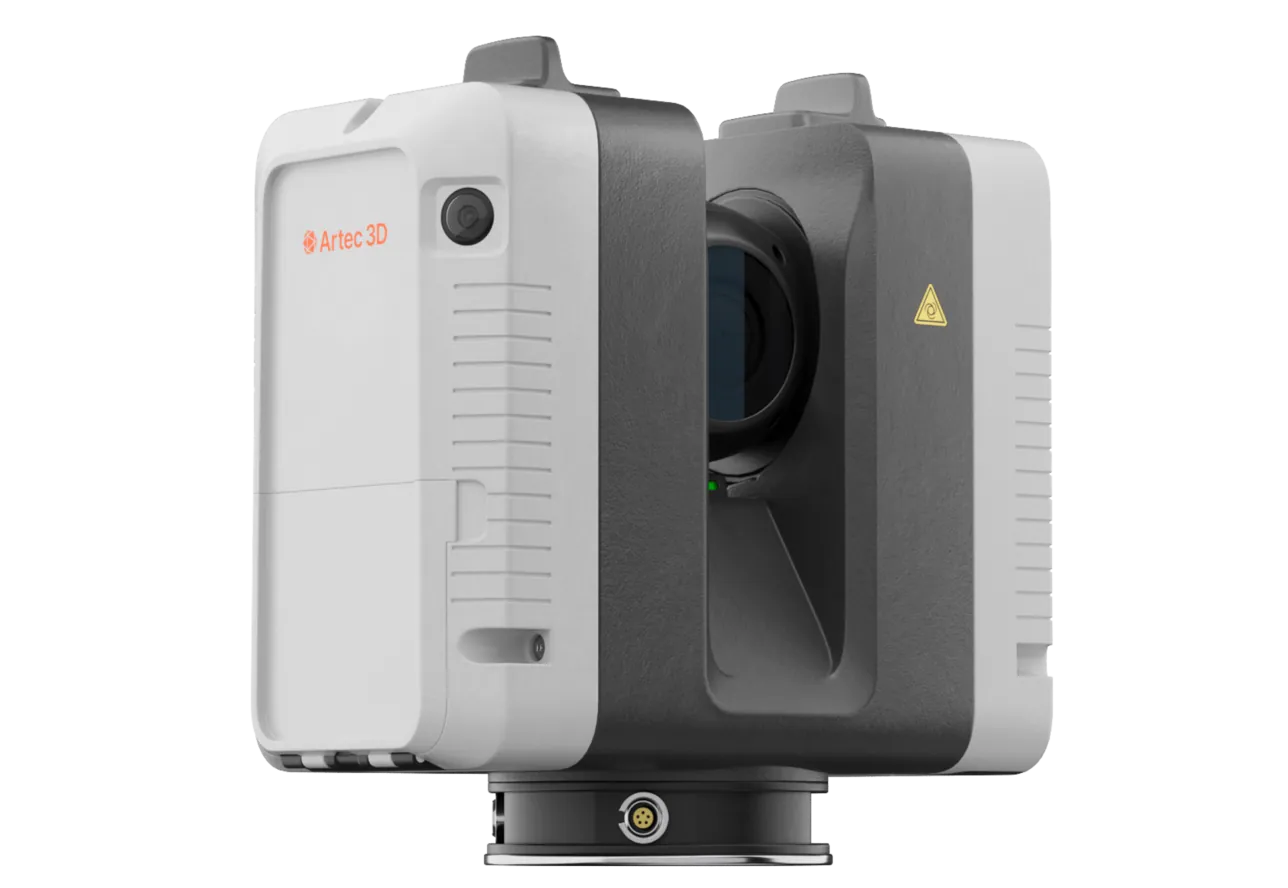
Artec Ray II
- Best for
- The bench before the shot and the muck pile after — volumes that reconcile
- Type
- Stationary long-range laser, tripod mounted
- Accuracy, up to
- 1.9 mm at 10 m, 2.9 mm at 20 m, 5.3 mm at 40 m
- Range noise
- 0.4 mm at 10 m
- Range
- 0.5–130 m
- Scan time
- 1 min 42 s at 3 mm, 10 m, without texture
- Field of view
- 360° × 300°
Ray II records a bench face or a muck pile from a tripod at 1.9 mm at 10 m and 5.3 mm at 40 m, out to 130 m, in under two minutes per station. Both surfaces land on mine grid through Twins, and the in-situ and pile volumes are computed from measured geometry rather than from the design polygon and the loader count.
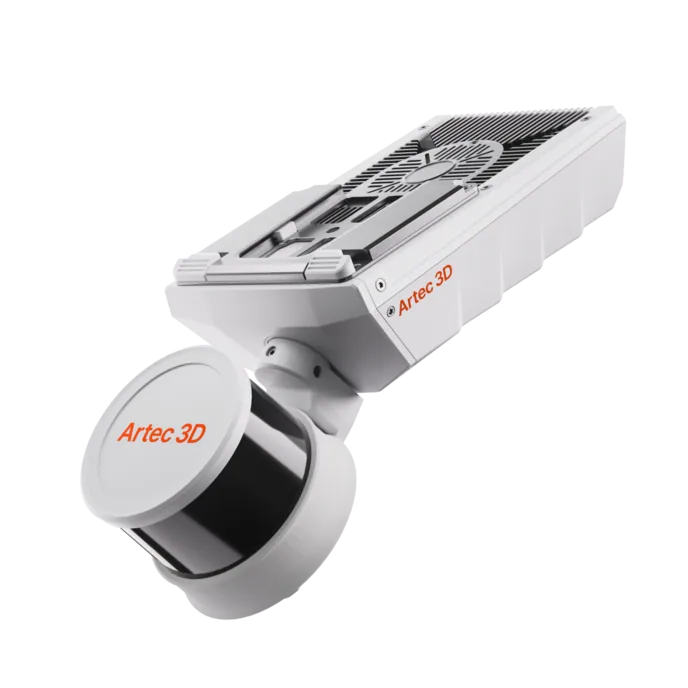
Artec Jet
- Best for
- Large shots and long benches, covered from a vehicle between the tripod stations
- Type
- Multi-modal SLAM LiDAR
- Accuracy, up to
- ±10 mm underground, ±15 mm general
- Change detection
- ±5 mm
- Range
- 0.5–300 m
- Positional drift
- ±0.03%
- Deployment
- Handheld, backpack, pole, drone, vehicle, cage, robot
Where a shot runs hundreds of metres, Jet on a vehicle records the whole bench and pile at ±15 mm as it drives the toe, with no stations, and registers into the same model. The tripod covers the faces where the accuracy matters; the mobile scanner covers the length.
See a shot reconciled from the bench as it stood and the pile as it landed, with the powder factor computed from what was actually broken — book a demo for your drill-and-blast team.
Book a demoQuestions blast engineers ask
Does the scan delay the dig?
The post-shot scan is taken from the exclusion line in a handful of two-minute stations while the pile is being cleared for entry. The dig starts on its normal schedule; the processing happens afterwards.
How accurate is the in-situ volume?
The bench surface is measured at 1.9 mm at 10 m, and the volume is that surface against the floor on mine grid. The error is a fraction of the difference between the real bench and the design solid it replaces.
Can we measure back-break and over-heave?
Yes. Back-break is the post-shot surface behind the design crest; heave is the pile surface above the pre-shot surface. Both are read from the difference between the two scans, with magnitudes and positions.
Does this feed our blast design software?
The pre- and post-shot surfaces export as LAS, LAZ, E57 and meshes, which the blast design and mine planning packages read. The next pattern is designed against the measured face rather than the previous design.
Related applications
Tell us how you reconcile shots today
Describe the bench heights, the shot sizes and what the reconciliation currently uses. A mining specialist will come back with how the two scans would fit the blast cycle and what the reconciliation would gain.