Mining equipment 3D scanning
A machine on a mine is modified, repaired and fitted with attachments for its whole life, and it is measured by hand each time — a fitter under a 10 metre excavator with a tape, in the hours the machine can be spared.
Scanned in the same window, the whole machine is a model at 1.9 mm with the detail at 0.1 mm: 4C digitised a 10 m excavator in two hours instead of two to three days, without lifting it.

How long does it take to 3D scan a mining machine?
Hours, not days: 4C digitised a 10 m excavator in two hours with Ray II and Leo, and Weldco-Beales captured a backhoe in about an hour of scanning.
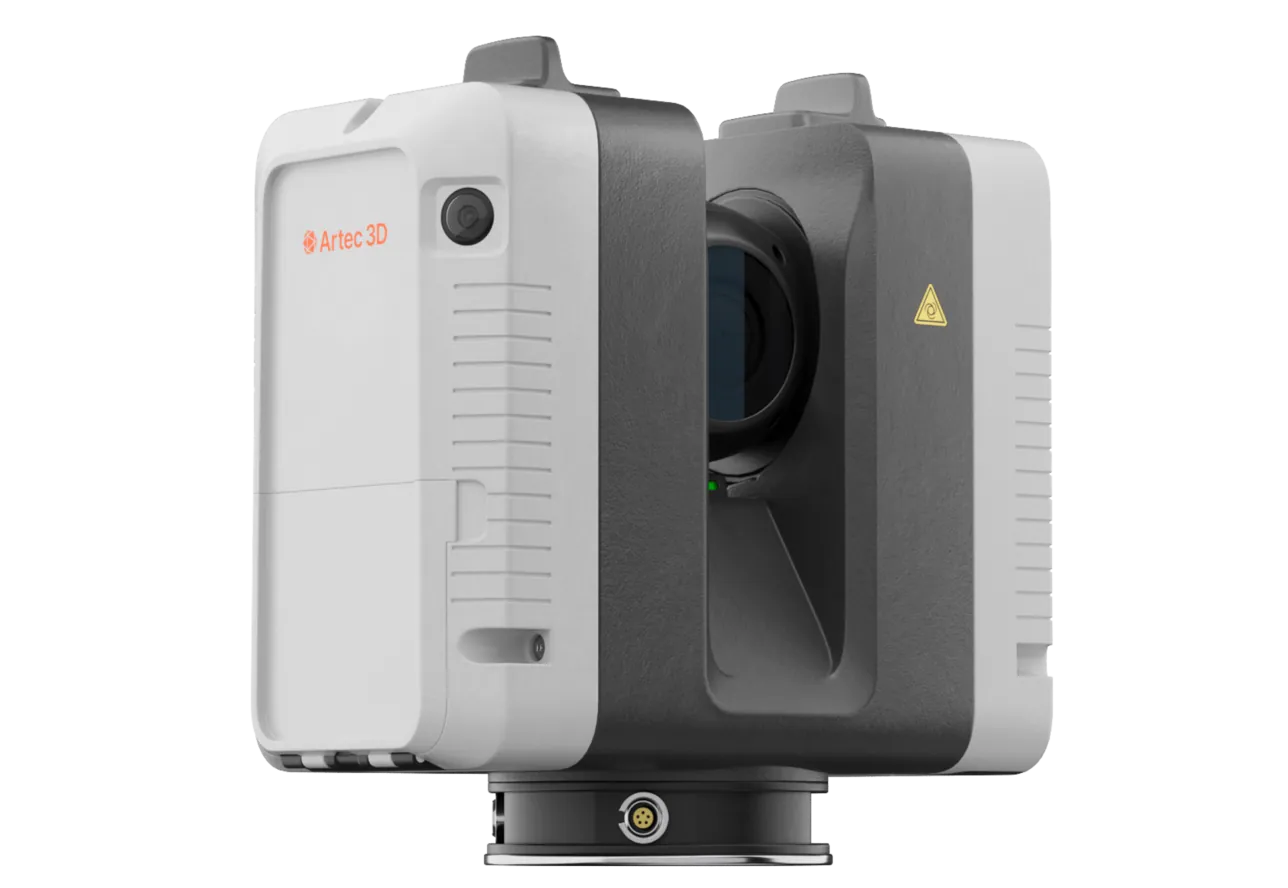
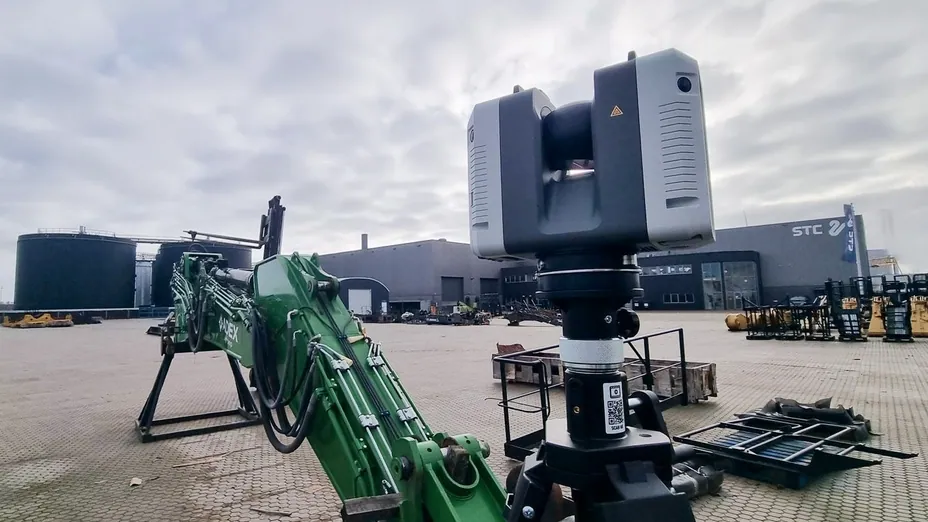
The whole machineRay II records the machine from a tripod at 1.9 mm at 10 m in a handful of stations.
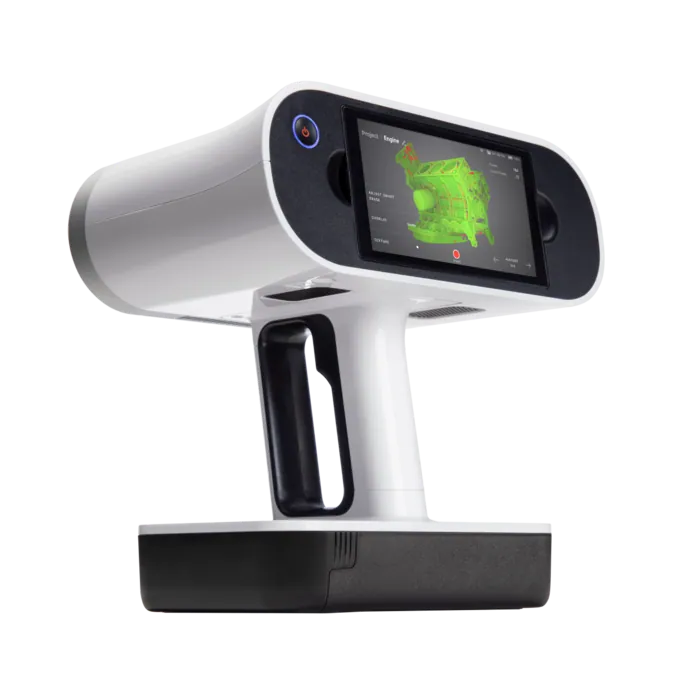
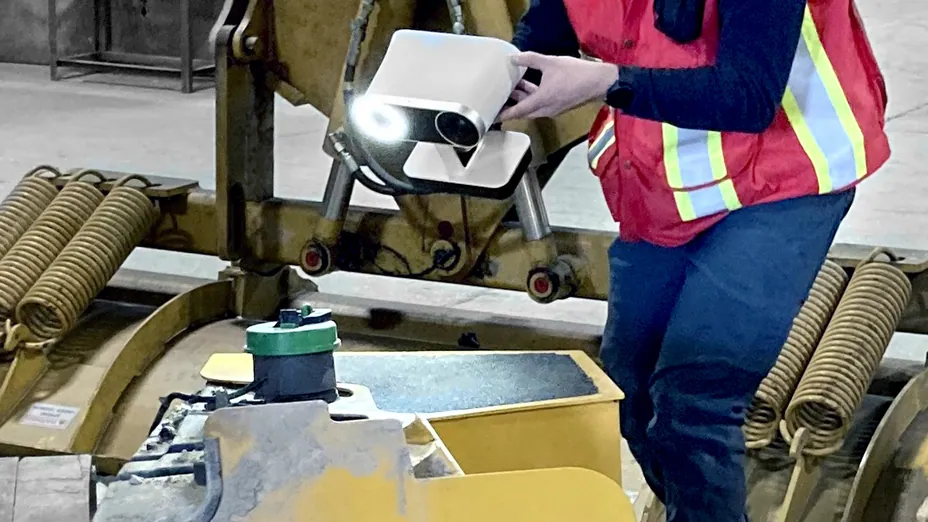
The detail at 0.1 mmLeo on the underbelly, the tracks and the mounting points, handheld.
2 hours, not 2–3 days4C’s figure for a 10 m excavator, captured without lifting it.
Fitters out of awkward placesWeldco-Beales scan where measuring by hand was unsafe.
Why machine modifications are measured under the machine
Heavy equipment is modified constantly — a longer arm, a different bucket, a guard, a bracket for a new sensor — and every modification has to fit a machine that was designed elsewhere and has since been repaired, welded and worn. The OEM model, if it is available at all, does not show the machine as it is. So a fitter measures it: under the belly with 80 cm of clearance, up on the boom, inside a track frame, with a tape and a level, while the machine is down and the maintenance planner counts the hours.
The measurements are as good as the access. Weldco-Beales, who manufacture heavy equipment attachments, described capturing geometry in outdoor conditions, confined spaces and elevated positions as slow by hand and as putting fitters in awkward places to do it. 4C Creative CAD CAM Consultants, fitting a longer hydraulic arm to a 10 m excavator, needed complex internals and an underbelly digitised — the kind of work that used to mean lifting the machine.
Scanning turns the machine into a model in the same window. Artec Ray II records the whole excavator from a tripod at 1.9 mm at 10 m; Artec Leo, handheld and wireless, records the tracks, the underbelly and the confined internals at 0.1 mm without a laptop to carry. 4C combined both in Artec Studio and had the 10 m excavator digitised in two hours instead of two to three days, without lifting it — a 50 GB capture decimated to a 300 MB model that kept full resolution where the strength analysis needed it. Weldco-Beales captured a backhoe in about an hour of scanning and eight of processing, work that had run to several days.
From maintenance window to machine model
The machine is down for the scan and for nothing else.
1. Scan the machineRay II on a tripod around the machine, each 360° × 300° station in under two minutes, at 1.9 mm at 10 m.
2. Capture the detailLeo on the underbelly, tracks, mounting points and internals at 0.1 mm — wireless, screen onboard.
3. Register and fuseArtec Studio aligns the whole-machine and detail scans; Smart Fusion resolves the model.
4. Decimate for the jobFull resolution kept where the analysis needs it, reduced elsewhere — 50 GB to 300 MB in 4C’s case.
5. Design and analyseThe model into Geomagic for SOLIDWORKS or the FEA package; the modification designed to the machine as it is.
Which scanner for this work
A machine is big and its mounting points are small; the two scanners split the job and register into one model.

Artec Ray II
- Best for
- The whole machine — boom, body, chassis — from a tripod
- Type
- Stationary long-range laser, tripod mounted
- Accuracy, up to
- 1.9 mm at 10 m, 2.9 mm at 20 m, 5.3 mm at 40 m
- Range noise
- 0.4 mm at 10 m
- Range
- 0.5–130 m
- Scan time
- 1 min 42 s at 3 mm, 10 m, without texture
- Field of view
- 360° × 300°
Ray II records a 10 m excavator from a handful of tripod positions at 1.9 mm at 10 m, each station in under two minutes. It is the scanner 4C used for the whole machine, and it works in a yard or a workshop regardless of lighting.

Artec Leo
- Best for
- Tracks, underbelly, internals and mounting points at 0.1 mm
- Type
- Wireless handheld structured light, all-in-one
- 3D point accuracy, up to
- 0.1 mm
- 3D resolution, up to
- 0.2 mm
- Working distance
- 0.35–1.2 m
- Capture speed
- Up to 35,000,000 points/s in HD Mode
- Onboard
- 5.5″ touchscreen, processing and 512 GB — no laptop
Leo goes where the tape went — under the belly with 80 cm of clearance, into the track frame — and records at 0.1 mm with 35 million points per second in HD Mode, wirelessly, with its screen and 512 GB onboard. Weldco-Beales reported that having no separate laptop removed most of the learning curve for their fitters.
Done on real machines


Weldco-Beales scans attachments where measuring by hand was unsafe
“Every time I visit clients, Artec Studio makes it so easy to demonstrate pinpoint alignment. You just find similar geometry between two scans and align it. When I show how simple it is, they’re always blown away by what’s possible with the technology.”
See a whole excavator captured in a maintenance window and the new arm designed to it in CAD, without lifting the machine — book a demo for your maintenance and engineering teams.
Book a demoQuestions maintenance engineers ask
How long is the machine down?
4C digitised a 10 m excavator in a two-hour window, including complex internals and the underbelly, without lifting it. Weldco-Beales captured a backhoe in about an hour of scanning; the eight hours of processing happened with the machine back at work.
Can it capture the underside and the internals?
That is what Leo is for. It is handheld and wireless, so it goes under the machine and into the track frame, recording at 0.1 mm — 4C captured an underbelly with roughly 80 cm of clearance without lifting the excavator.
Is the model too big to use?
It is decimated for the job. 4C reduced a 50 GB capture to a 300 MB model that still carried high resolution where the strength analysis needed it; Artec Studio does the decimation with control over where detail is kept.
Does it work outdoors, in dust and sun?
Ray II is a laser scanner unaffected by daylight; Leo’s structured light handles outdoor conditions, and Weldco-Beales use it in exactly those. Heavy rain and airborne dust degrade any optical capture, and the scan is timed accordingly.
Related applications

Tell us about the equipment you need to capture
Describe the machine, the modification or part, and the window you get. A mining specialist will come back with how the capture would run in that window and what the model would feed.